


Glasp’s note: At Glasp, we value the close personal relationships we’ve built with thinkers, creators, and doers who fuel curiosity and growth. This week, we spotlight Bobby Powers —a lifelong learner passionate about leadership development and continuous improvement. With more than a decade of experience leading teams and developing learning and development at startups, Bobby understands the transformative power of curiosity and mentorship. You might remember him from his Glasp Talk appearance, where he shared insights on leadership and personal growth, inspiring thousands. We’re honored to continue learning from Bobby and are thrilled to share his thoughtful reflections with our community.
If you want to reread or highlight this newsletter, save it to Glasp.
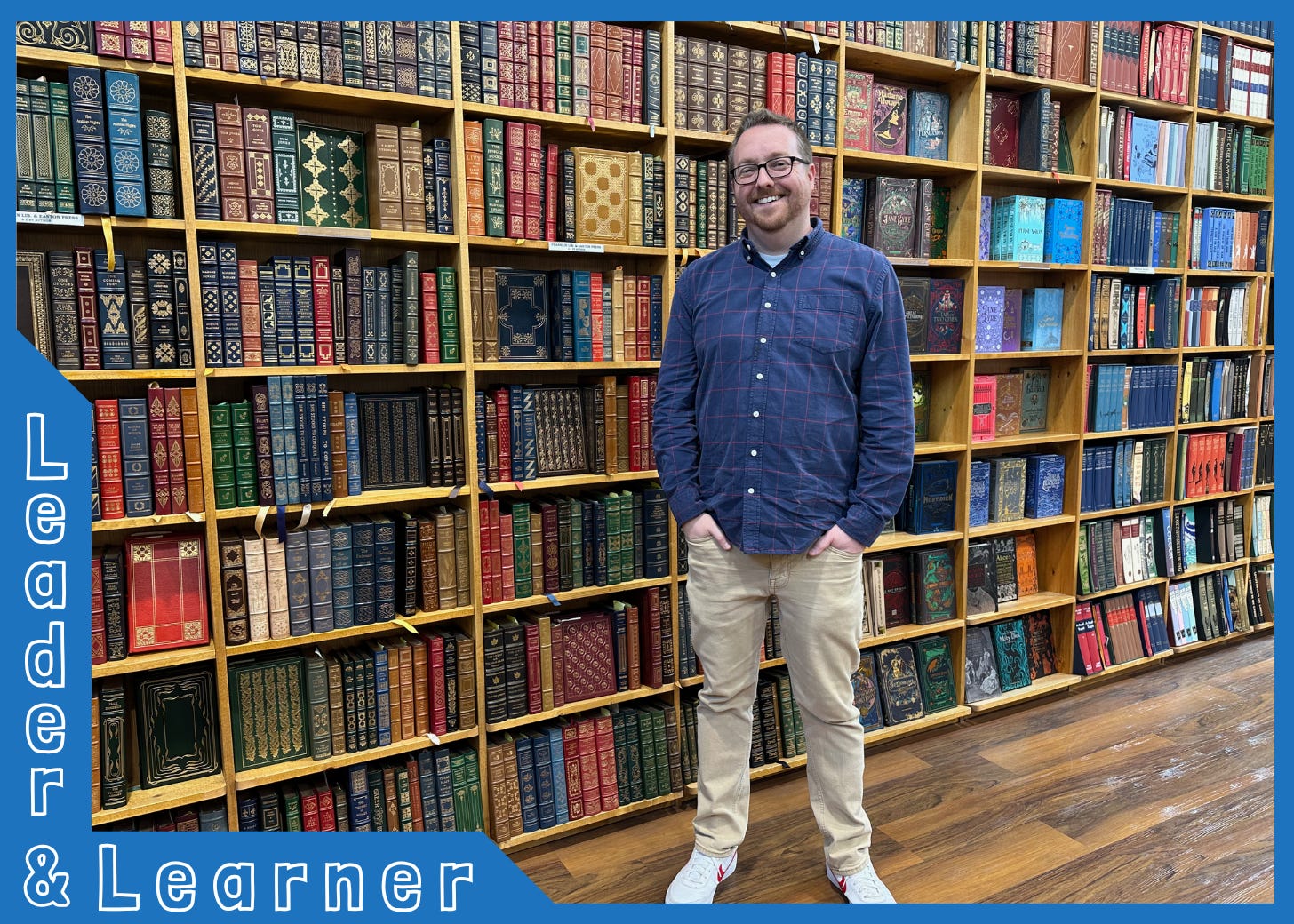
Hi, I’m Bobby Powers! I run the Leader & Learner publication, where I share two posts per week that will help you become a more curious leader and learner.
I used to think classic literature was boring, so I steered clear of it. I’m guessing you may do the same. But once I realized that the sour taste in my mouth was residual from required reading in school, I decided to give the classics another chance.
I’m glad I did because I ended up falling in love with a bunch of old books. In fact, now I’m even working my way through a list of the Top 200 Books of All Time.
If you’re hesitant to read classic lit, this post is for you.
I’ve read some literature duds, but these 15 are the best ones I’ve found. Each one is engaging and well worth the time—even if you’ve already seen the movie or think you already know the story.
I sorted the list by author’s last name and included a brief description of each. I also included the number of pages (so you can get a feel for the time cost of reading each one), along with my subjective measure of readability, which I based on the complexity of the language, the intricacy of the storyline, and the length of the book.
Little Women by Louisa May Alcott
# of Pages: 480
Readability: Medium
As a guy in his late 30s, I pre-judged this book and figured I wouldn’t enjoy it. If it came out today, I think the publisher would have given it a different title so readers would understand it’s a book for everyone. But regardless of title, this book is fantastic. Alcott’s classic tale about Meg, Jo, Beth, and Amy Marsh is meaningful, fun, and inspiring.
Fahrenheit 451 by Ray Bradbury
# of Pages: 256
Readability: Easy
Fahrenheit 451 is one of the first books that taught me classic literature can be fun. I was immediately sucked in by Bradbury’s dystopian world that turns the role of “firefighter” on its head. (In the bleak world of this story, the government has banned all books, and society’s firefighters are government agents tasked with burning any books that are discovered.) Protagonist Guy Montag wrestles with his role as a book-burner.
The Master and Margarita by Alexander Bulgakov
# of Pages: 448
Readability: Difficult
Bulgakov’s classic novel served as a scathing critique of the political and religious oppression in Stalinist Russia. The devil comes to earth and wreaks havoc in Russia alongside his motley crew of a black cat, a tall man with broken glasses, and a hitman. I’m still trying to process the allegorical layers because there’s so much to unpack.
Heart of Darkness by Joseph Conrad
# of Pages: 160
Readability: Medium
Short book with tons of depth. Sailor Charles Marlow decides to join an ivory trading firm. After joining, Marlow keeps hearing stories about a powerful and enigmatic man named Kurtz. His obsession with Kurtz grows until he finally meets the man. Marlow meets Kurtz much later than I expected, and the story’s conclusion brilliantly connects back to the book’s title in multiple ways.
Charlie and the Chocolate Factory by Roald Dahl
# of Pages: 192
Readability: Easy
I’ve watched the old Gene Wilder movie multiple times (as well as the subpar Johnny Depp version), but reading the book gave me the chance to experience the joy anew when Charlie unwraps the chocolate bar containing that glorious golden ticket. Dahl is one of the best children’s authors of all time, and this book is a must-read for both kids and adults. It’ll help you rediscover your childlike wonder and whimsy.
The Count of Monte Cristo by Alexandre Dumas
# of Pages: 1,312
Readability: Difficult
Simply put: the most epic revenge story of all time and my favorite novel I’ve ever read. It’s girthy but so worth the time that I’ve actually read it twice. Everyman Edmond Dantès is condemned to prison for a crime he didn’t commit—a plan masterminded by two men Dantès thought were friends. When he emerges from prison, he strives to enact his vengeance. You’ll read this book not only cheering for Dantès but feeling like you’re right alongside him.
The Great Gatsby by F. Scott Fitzgerald
# of Pages: 208
Readability: Easy
The Great Gatsby relates the emptiness of fortune and the pangs of love better than any novel I’ve read. It’s also a lurid portrayal of the Roaring Twenties that will make you want to suit up and talk your way into one of Gatsby’s lavish parties. At roughly 200 pages, this is a quick read and another one of my favorite novels of all time.
Lord of the Flies by William Golding
# of Pages: 336
Readability: Easy
Such a fascinating premise: A group of boys turns Darwinian after getting marooned on a small island. Their time away from their mommies and daddies originally seems fun, but things turn violent after divisions form within the group. This 1954 book seems to have spawned many other stories of children placed in horrible situations, such as the 1999 book Battle Royale (and its 2008 American copycat The Hunger Games), along with TV series like The Wilds (2020–2022).
To Kill a Mockingbird by Harper Lee
# of Pages: 336
Readability: Easy
Easily one of the most heartbreaking books I’ve ever read. I assume you’re familiar with this story by now and have likely at least watched the award-winning movie. But even so, you should read the book. It’s a powerful depiction of racism in 1930s America with sprinkles of optimism and hope for humanity.
1984 by George Orwell
# of Pages: 304
Readability: Medium
Orwell’s classic dystopian novel lives up to the hype. It was the origin of the phrase “Big Brother,” the name Orwell gave to the fictional dictator in Oceania. Just like any good dystopian fiction, 1984 holds up a magnifying glass to the present day, calling into question any form of government surveillance, censorship, and propaganda.
The Strange Case of Dr. Jekyll & Mr. Hyde by Robert Louis Stevenson
# of Pages: 200
Readability: Easy
“Jekyll and Hyde” is such a popular concept these days that I didn’t realize how late in the book Stevenson reveals the truth about those two characters. It was fun to read the story with today’s knowledge and consider how shocked UK readers must have been in 1886 when they read Stevenson’s epic reveal.
Dracula by Bram Stoker
# of Pages: 512
Readability: Medium
Stoker uses journal entries, letters, and newspaper clippings to tell this iconic story, making it one of the most unique stories I’ve ever read. Dracula is a touchstone of Gothic horror: a spooky setting, weird stuff happening, a mysterious count who seems to be behind it all, and supernatural creatures that pose an existential threat to humankind.
The Hobbit by J.R.R. Tolkien
# of Pages: 320
Readability: Medium
Bilbo Baggins gets more than he bargained for when he opens his door to find a wizard and a collection of dwarves. Bilbo leaves his slow-paced life in the Shire to set out on a mythical quest with his new retinue, kicking off arguably the most famous fantasy series of all time. I loved the characters and the entire epic world that Tolkien paints. Read this one first, and if you like it, I’d definitely recommend the entire Lord of the Rings series.
The Time Machine by H.G. Wells
# of Pages: 128
Readability: Easy
H.G. Wells broke new literary ground with this book, which popularized the concept of time travel and became the first modern-day science fiction novel. Wells explores fascinating questions about the potential future of humanity as the gap between the rich and the poor expands. This one is easy to read, fast-paced, and intriguing.
The Picture of Dorian Gray by Oscar Wilde
# of Pages: 304
Readability: Easy
The core concept behind this book is enough for it to warrant a spot on my list. A young man sells his soul for eternal youth, but his portrait continues to age, revealing Gray’s physical (and moral) deterioration. But the book is so much more than that. It’s also a story of forbidden love in a society that disallowed homosexuality. Tragically, Wilde’s novel was even used in court as evidence against him in an indecency lawsuit.
*Honorable Mention: Les Misérables by Victor Hugo
# of Pages: 1,232
Readability: Difficult
My list wouldn’t be complete without this book. Although it is massive and took me forever to read, it became one of my favorite novels of all time because it contains several of the best examples of unconditional love I’ve ever read. It’s also a great primer on the June Rebellion of 1832 in Paris, shortly after the French Revolution. (I’m listing it as only an Honorable Mention because it’s daunting and not the first one to tackle on this list if you want to dip your toes in the water of classic lit.)
Note: If you buy this book, be sure to get the Norman Denny translation. The translation matters a TON for this book.
I hope you enjoy these great books. Each one includes an affiliate link from Bookshop.org. (If you buy one, you’ll support me as well as local bookstores. Win-win!)
👉 Want to receive two posts per week with book recs and personal development tips? I’d be honored for you to subscribe to Leader & Learner.
📣 Community Updates by Glasp
🟥 Glasp Talk with Bobby Powers:
Glasp Talk features intimate interviews with luminaries, revealing their emotions, experiences, and stories. The guest, Bobby Powers, is a dedicated learner passionate about leadership and personal development. With over a decade of experience managing teams, leading onboarding, and Learning and Development programs at various startups and SMBs, Bobby is also an avid reader, having read over a thousand books in the last 15 years.
✨ Want a concise summary before diving in? Install the YouTube Summary with ChatGPT extension by Glasp for instant video summaries!

🟦 Chat with PDF:
We published a new tutorial on how to chat with PDFs on Glasp. Upload any document, ask questions, and get instant summaries with page citations — all while keeping your highlights and notes in one place. Free accounts can upload files up to 500MB and store up to 30 PDFs, well beyond the typical 10–15MB limits elsewhere.
Would you like to take Glasp on the go?
With the Glasp mobile app, you can highlight and organize your favorite content anytime, anywhere. Stay productive on the move and never miss an insightful quote.
Partner With Glasp
We currently offer newsletter sponsorships. If you have a product, event, or service you’d like to share with our community of learning enthusiasts, sponsor an edition of our newsletter to reach engaged readers.