


“We must accept finite disappointment, but never lose infinite hope.”
― Martin Luther King Jr.
Hi friends,
We hand-picked 3 good pieces of content to inspire and motivate you now and in the future. Keep track of the insights that resonate with you by highlighting them with Glasp💡
If you want to reread or highlight this newsletter, save it to Glasp.
📚 3 Good Recommendations
How to Apply Mindset: Using Growth Mindset to Actually Learn Better
by Glasp (12 mins)
Mindset shapes action: Fixed mindset treats struggle as proof you lack ability, prompting avoidance. Growth mindset treats it as normal learning, prompting next steps. Swap “I’m bad at this” for “I’m a beginner at this.”
“Yet” forces a plan: Adding “yet” to being stuck (”I don’t understand this yet“) naturally leads to asking what to do next—find another explanation, work an example, teach it back.
Research is modest but real: Growth-mindset effects are small on average, strongest for struggling students in supportive settings. It keeps you in the seat long enough for real techniques (active recall, spaced practice) to work—the door, not the room.

Why AI hasn’t replaced software engineers, and won’t
by Arvind Narayanan and Sayash Kapoor (18 mins)
AI is automating coding, not software engineering. Software development consists of deciding what to build, implementing it, and verifying/delivering it. AI has greatly improved the implementation (”execute”) stage, but the decision-making and accountability stages still require humans.
Claims of AI-driven mass layoffs are not supported by the evidence. Many highly publicized layoffs attributed to AI were actually driven by financial pressures, restructuring, or cost-cutting. Research suggests AI’s labor-market impact is more likely to slow hiring growth than to cause widespread firing.
AI may increase demand for software engineers rather than eliminate them. As software becomes cheaper and faster to create, organizations and individuals are likely to build much more of it. Engineers’ roles will shift toward supervising AI systems, defining requirements, making decisions, and ensuring quality rather than writing every line of code themselves.

Building a Good Vertical Agent
by Peter Wang (14 mins)
Thesis: A good agent is a “faithful compression of its task distribution” — with the model fixed, accuracy depends on placing each capability at the tier that minimizes context cost across a long tail of tasks.
The hierarchy: Structure context like CPU memory — L1 for the bread-and-butter ~80% (always in the prompt, heavily compressed), L2 for occasional capabilities (curated English specs fetched on demand), L3 for the raw API tome (on disk, mined via a short skill).
Takeaways: Use one
execute_codetool not thirty, spend disproportionate effort on the common operations, and expect the tiers to slide down as models improve — though “the right thing at the right time” always matters.
📣 Community Updates
🟨 Glasp Research — Now on arXiv:
We’ve been publishing research papers on arXiv. They cover how Glasp grew its ChatGPT referral traffic (separating real AEO gains from the answer engines’ own growth) and what millions of highlights reveal about how people read. Browse them all here.🟦 Kindle Highlights Milestone:
Glasp users have now imported over 71,000 Kindle highlights. Bring your own library in here.🟥 YouTube Channel Tracking:
Over 3,100 YouTube channels are now being tracked on Glasp, so you never miss a new video worth highlighting. Start tracking here.🟩 Guest post on Growth with Sean Ellis:
We wrote a guest post for Sean Ellis, who coined the term “growth hacking,” on how Glasp grew ChatGPT traffic ~37x — from about 500 to 19,000 daily sessions in four months — by reading our own server logs instead of querying LLMs from the outside. Read it here.
❤️ Gratitude
Thank you for sharing and mentioning us on X, LinkedIn, and/or your blogs. 🙂 We appreciate your support! Please don’t hesitate to ask us anything at any time. Also, feel free to join our Reddit Community ;)
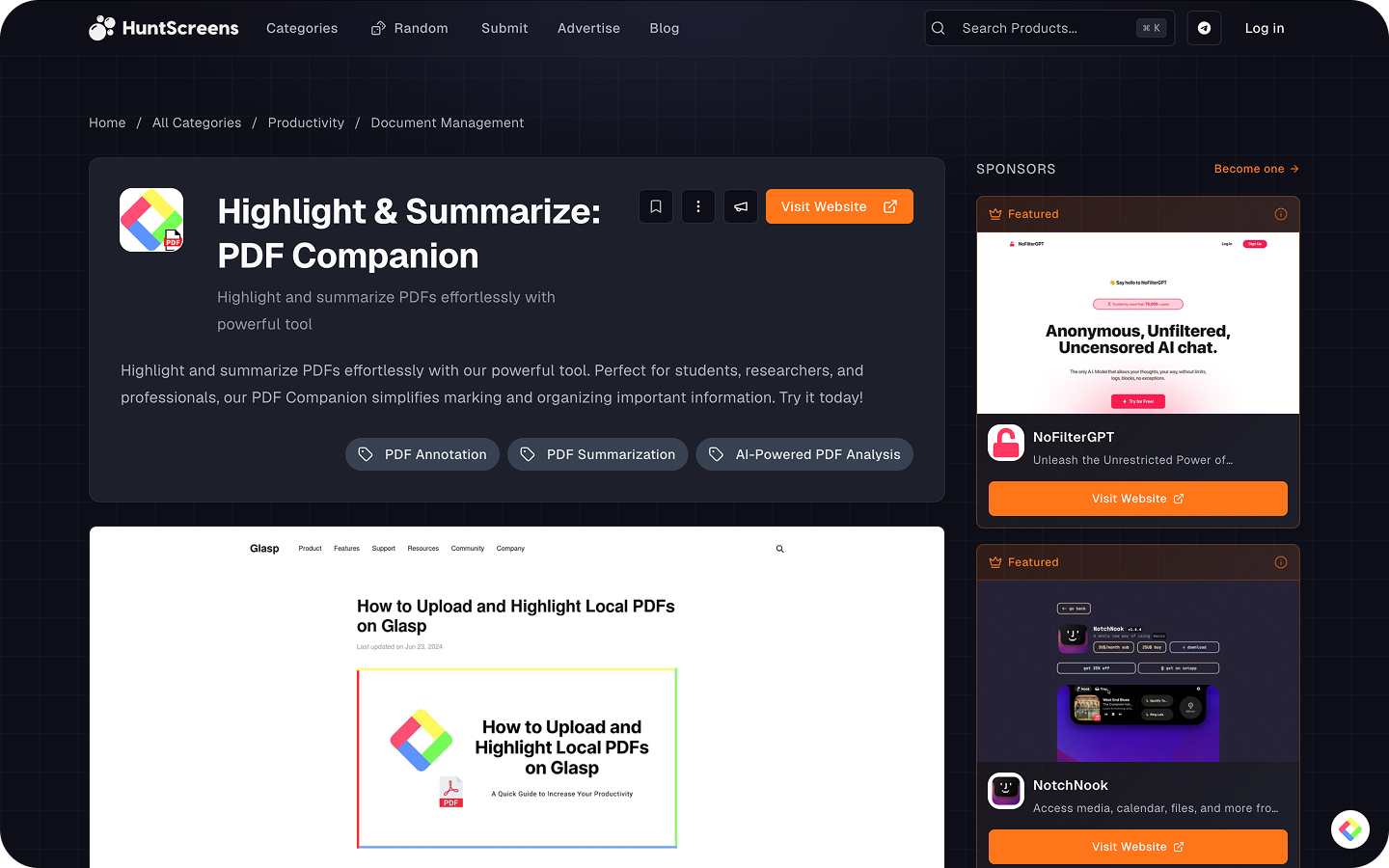
Highlight & Summarize: PDF Companion on HuntScreens
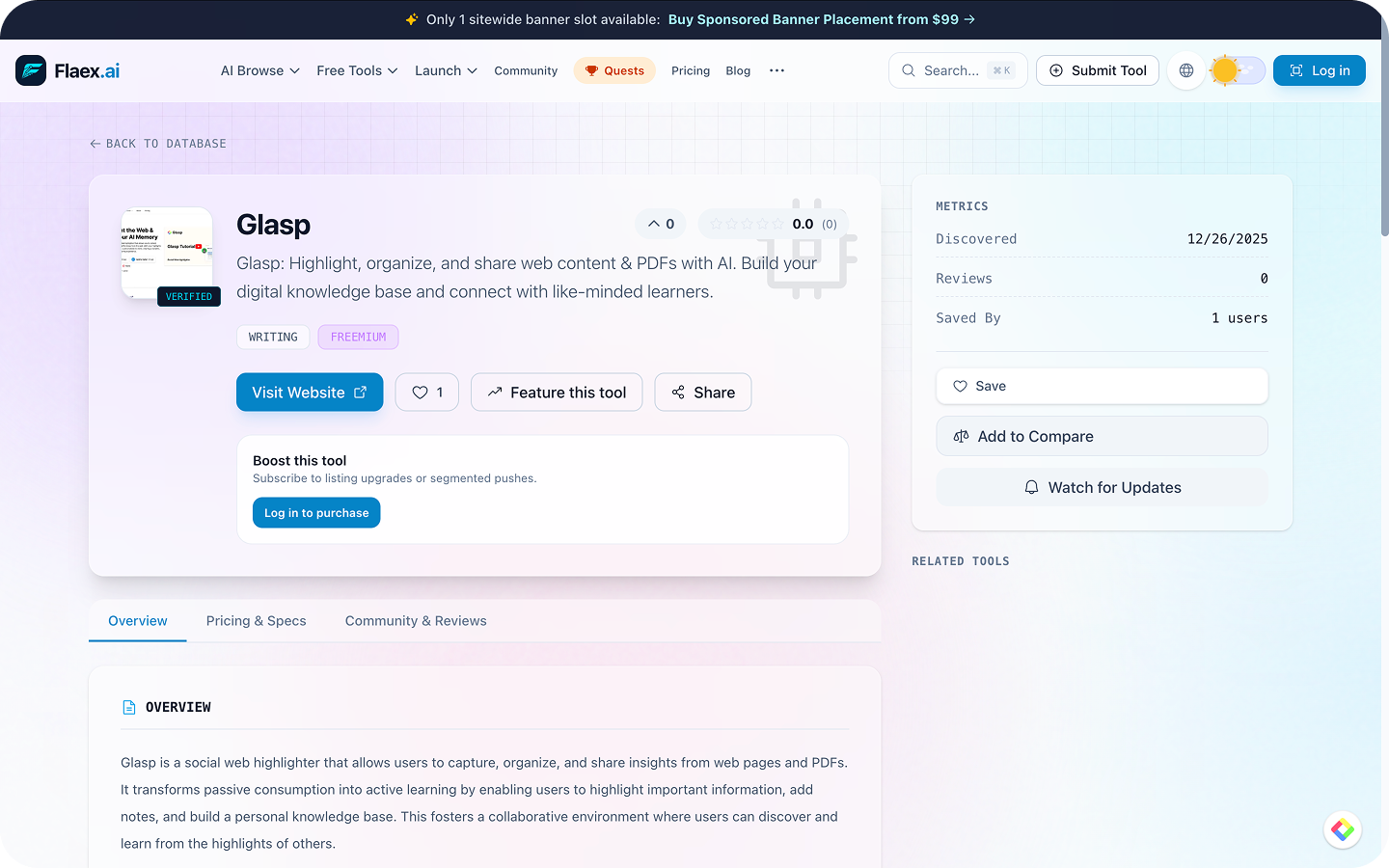
Glasp on Flaex.ai
Best AI Tools for Literature Review and Thesis Writing 2026 on iLovePhD
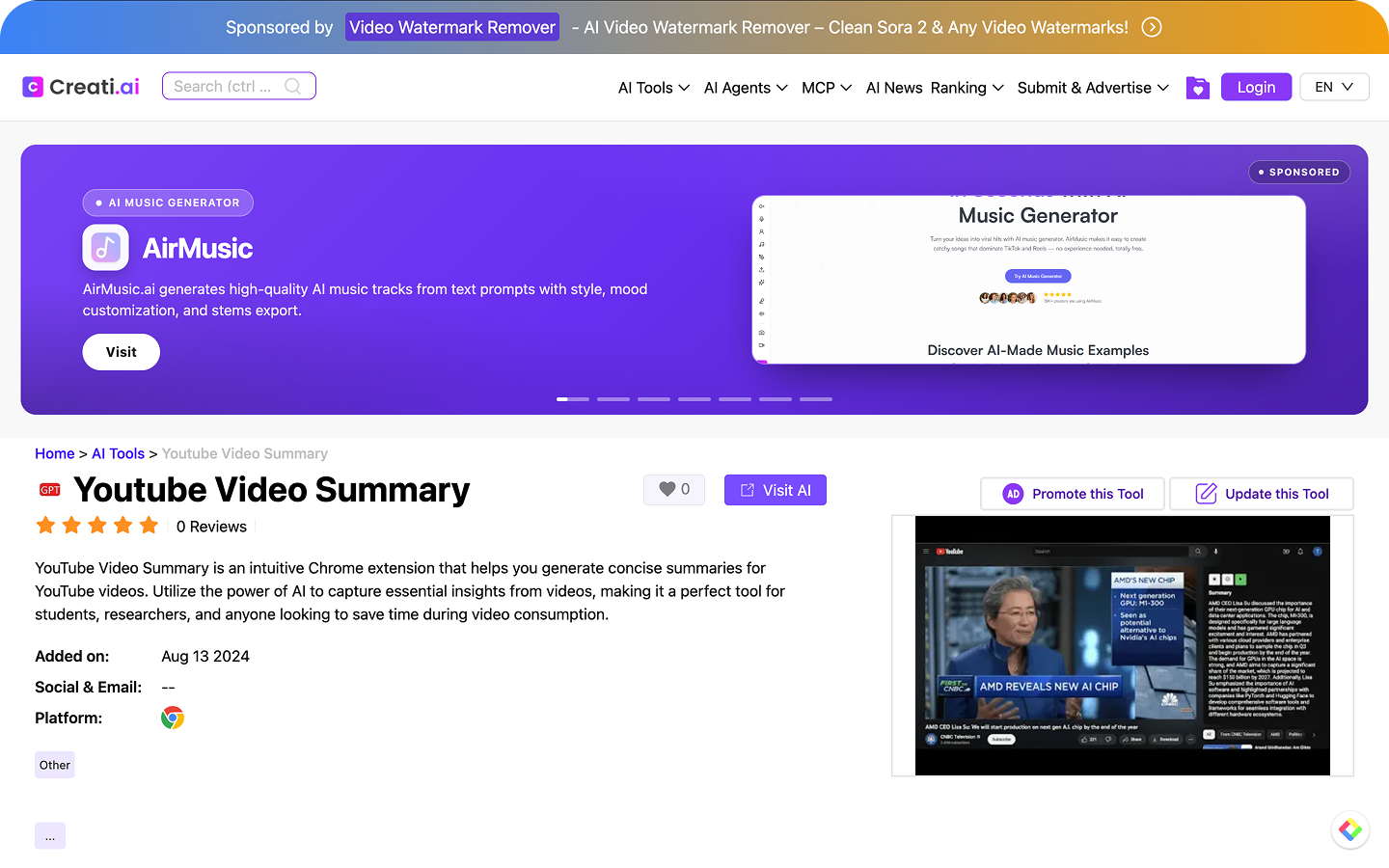
Youtube Video Summary on Creati.ai
Vous produisez de l’or. Et vous le jetez. (You produce gold. And you throw it away.) on by Sophie - Hooked ! on Off the Hook
🔎 Personne ne connaît cette astuce (🔎 No one knows this trick) by Flavie Prevot on Vraiment libre
MAG7 | La nouvelle norme humaine (MAG7 | The new human standard) on César Monchablon
Claude Opus 4.7 + Claude Design: la guida pratica per usarli nel tuo lavoro (Claude Opus 4.7 + Claude Design: a practical guide to using them in your work) by Luca Mastella
Come creo un ecosistema di contenuti qualitativi con l’AI (metodo semplice) (How to create a high-quality content ecosystem with AI (simple method)) by Simone Dassereto
La Mappa Personale di Chi Ha Cambiato il Mio Modo di Pensare alla Curation - #74 by Robin Good on TRUST-able - Edizione Italiana
We hope you enjoyed reading this newsletter!
See you next week ;)
Best,
Kei and Kazuki
--
Would you like to take Glasp on the go?
With the Glasp mobile app, you can highlight and organize your favorite content anytime, anywhere. Stay productive on the move and never miss an insightful quote.
Partner With Glasp
We currently offer newsletter sponsorships. If you have a product, event, or service you’d like to share with our community of learning enthusiasts, sponsor an edition of our newsletter to reach engaged readers.
Curious where you land on this: what part of your job do you think AI genuinely cannot take over?
I'll go first: deciding what NOT to build. Every week AI makes building easier and choosing harder.
New here? The reason we care about human learning so much: https://read.glasp.co/p/why-im-building-glasp
Not on Substack? Same thread on Reddit: https://www.reddit.com/r/glasp/
Thanks for the reference !