


Glasp’s note: At Glasp, we value the close personal relationships we’ve built with thinkers, creators, and doers who fuel curiosity and growth. This week, we spotlight Bobby Powers —a lifelong learner passionate about leadership development and continuous improvement. With more than a decade of experience leading teams and developing learning and development at startups, Bobby understands the transformative power of curiosity and mentorship. You might remember him from his Glasp Talk appearance, where he shared insights on leadership and personal growth, inspiring thousands. We’re honored to continue learning from Bobby and are thrilled to share his thoughtful reflections with our community.
If you want to reread or highlight this newsletter, save it to Glasp.
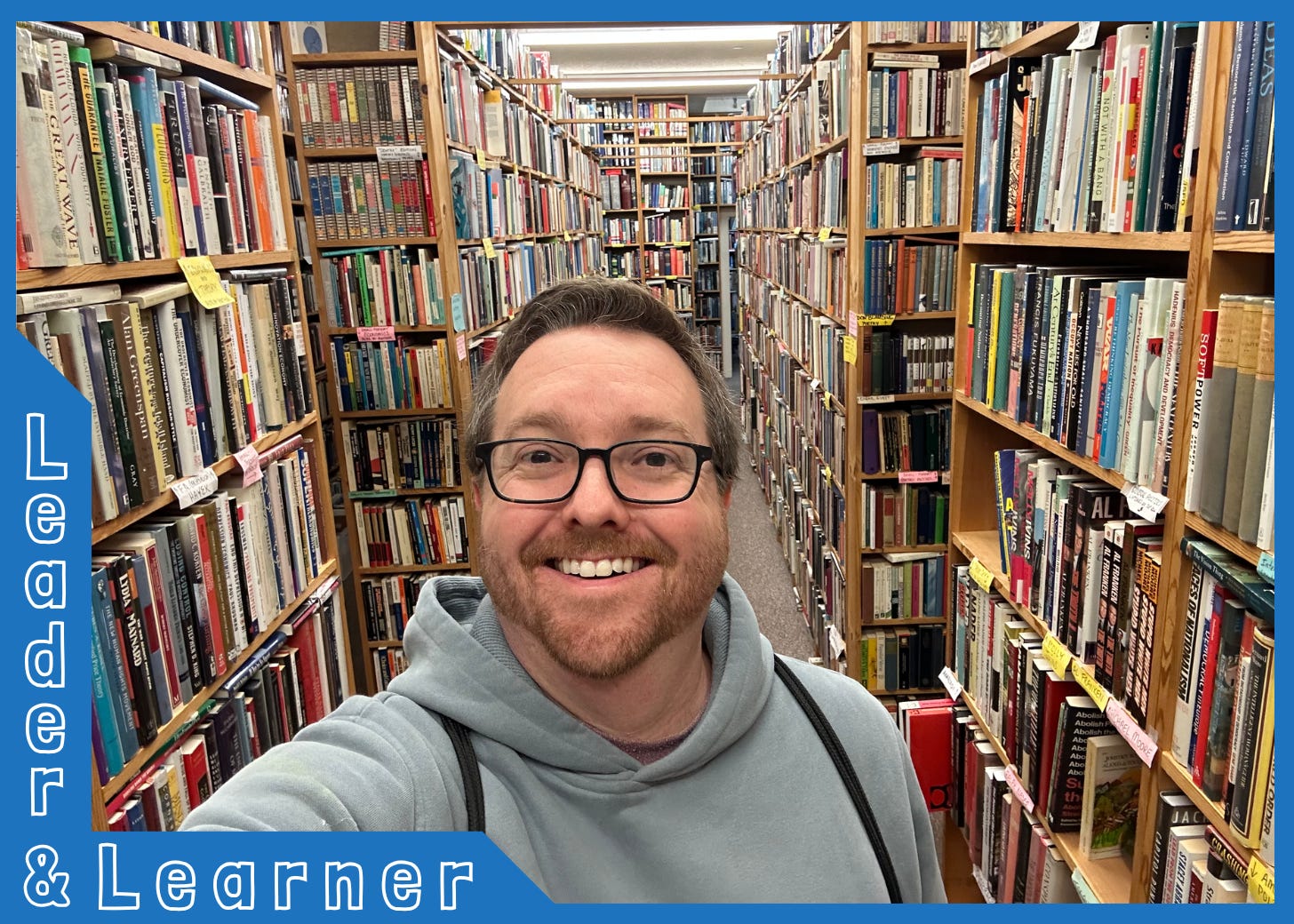
Hi, I’m Bobby Powers! I run the Leader & Learner publication, where I share two posts per week that will help you become a more curious leader and learner.
I read 70+ books per year, and I’ve been doing that for the past decade. Each year of reading has brought new favorites that I share near and far with friends, family, and online readers.
In an earlier post, I shared the 30 best fiction books I’ve read in the past decade. Since then, I’ve wanted to expand that list to my 100 favorites of all time, including some absolute faves I read much longer than 10 years ago.
This list contains a bit of everything: new novels and classic literature, standard prose and graphic novels, YA fiction and mature books, and bestsellers alongside books you’ve never heard of.
Reading recs are inherently subjective, so I know you’ll disagree with some of the books I’ve included. (Feel free to share your thoughts in the comments.) But I also know several on this list will catch your eye and join your TBR list.
Here’s my Top 100 list, alphabetized by author’s last name. I included a 3-4 sentence summary for each one.
Note: After every 10 books, I’ve included a picture of some of my favorite bookstores around the world. I wrote the name of each in the caption in case you want to visit!
Little Women by Louisa May Alcott
For years, I pre-judged this book, thinking I wasn’t part of the target market for a coming-of-age story about four sisters. I was 100 percent wrong. Alcott’s classic about Meg, Jo, Beth, and Amy Marsh is meaningful, fun, and inspiring.
The Handmaid’s Tale by Margaret Atwood
I appreciated The Handmaid’s Tale even more when I learned that Atwood tried to ensure every crazy event in the book was derived from real events from prior totalitarian regimes. That makes the storyline even crazier (and more depressing). Follow along as the handmaid Offred rebels against the oppressive patriarchal regime of the Republic of Gilead.
Pride and Prejudice by Jane Austen
Remarkably, it took me until my mid-30s to read Austen. Now I know why her books have a prominent place on nearly every Top 100 list ever written. (And yeah, I’m now a fan of Mr. Darcy.) Pride and Prejudice delves into social classes, outdated gender roles, family, vanity, gossip, and psychology.
The Compound by S.A. Bodeen
This was one of my favorites I stumbled upon during my young adult (YA) fiction binge years ago. It follows a boy named Eli who’s lived underground for six years. His family has sheltered to avoid some unknown, horrible thing, but you’re left wondering what that is for the majority of this fast-paced read.
Fahrenheit 451 by Ray Bradbury
Fahrenheit 451 is one of the first books that taught me classic literature can be fun. I was immediately sucked into Bradbury’s dystopian world that turns the role of “firefighter” on its head. In the bleak world of this story, the government has banned all books, and society’s firefighters are government agents tasked with burning any books they discover.
Red Rising (#1) by Pierce Brown
Just like everyone else in the country, I jumped on the YA bandwagon after reading books like The Hunger Games. Red Rising was the best series I found to scratch that itch, and the first book of the series is one of the most unputdownable books of all time. I’m usually able to predict where a book is headed, but this one fooled me multiple times.
Note: For any book series on this list, I only included the first book of the series.
The Master and Margarita by Mikhail Bulgakov
Bulgakov’s classic novel served as a scathing critique of the political and religious oppression in Stalinist Russia. The devil comes to earth and wreaks havoc in Russia alongside his motley crew, which includes a black cat, a tall man with broken glasses, and a hitman. I’m still trying to process the allegorical layers of this book because there’s so much to unpack.
If On a Winter’s Night, A Traveler by Italo Calvino
Speaking of tons to unpack, this book is a mind trip. I read it with a book club, and I’m thankful I did because it’s one of the most complex books I’ve read. In this postmodern narrative, Calvino weaves 10 separate storylines together to explore how reading shapes our lives.
In Cold Blood by Truman Capote
This “non-fiction novel” is arguably the most famous true crime novel of all time. But rather than reporting the mere facts of the case, Capote injects a unique blend of subjectivity and emotion into this true story about the brutal killing of four people in Holcomb, Kansas. Capote’s writing format influenced many future nonfiction authors.
Ender’s Game by Orson Scott Card
Mostly because I didn’t enjoy reading in junior high and high school, I didn’t read this book until I was an adult. It still packed a wallop. The plot centers around precocious Ender Wiggin, who’s enrolled in a military school and pitted against fellow students and otherworldly foes in this fast-paced sci-fi novel.

Alice in Wonderland by Lewis Carroll
Carroll’s story is weird, entertaining, and creative. It’s also super short: 110 pages. I mainly read this because it’s on the Top 200 list I’m working through, but I enjoyed it enough that I pressed on and also read the sequel Through the Looking-Glass.
And Then There Were None by Agatha Christie
Authors like Chuck Palahniuk recommend using a “clock” to drive your story forward and build suspense. This book’s title serves that purpose: As one character after another bites the dust, you know how close you are to the ultimate conclusion. The book’s final reveal remains one of my favorites in fiction.
Ready Player One by Ernest Cline
The year is 2045, and the world has been ravaged by poverty, climate change, and war. The majority of humanity copes with the world’s destitution by immersing themselves in the virtual reality of the OASIS — the brainchild of computer scientist James Halliday. Halliday has decided to bequeath his fortune to whoever can find the Easter egg hidden inside the OASIS, and teenage gamer Wade Watts thinks he’s up to the challenge.
The Alchemist by Paulo Coelho
The Alchemist follows the story of a young shepherd boy who yearns to travel the world and become rich. The lessons he learns on his journey show him that he may very well be focused on the wrong things in life. Just like many readers, I found Coelho’s book to be inspiring, magical, and well-written.
The Hunger Games (#1) by Suzanne Collins
This series kicked off my multi-year reading binge of YA fiction when I was in grad school. Collins’s conclusions of books leave something to be desired, but she sure knows how to craft a cliffhanger at the end of a chapter. After reading this series, bow-shooting badass Katniss Everdeen became one of my favorite fictional characters.
Heart of Darkness by Joseph Conrad
In this short book with tons of depth, sailor Charles Marlow joins an ivory trading firm, where he keeps hearing stories about a powerful and enigmatic man named Kurtz. Marlow’s obsession with Kurtz grows until he finally meets the man. That fateful meeting occurs much later in the book than I expected, and the story’s conclusion brilliantly connects back to the story’s title in multiple ways.
Jurassic Park by Michael Crichton
I’m guessing you’ve watched the movie but never read the book. If so, check out the book because it’s a fun way to re-live this larger-than-life story. Plus, Crichton is enough of a nerd to make the science believable. (He began his career as a doctor.)
Pines (Wayward Pines I) by Blake Crouch
It’s hard to express exactly how good (and underrated) this book really is. Two federal agents go missing in Wayward Pines, Idaho, and the Secret Service agent who’s sent to find them realizes a lot is going on behind the scenes in this spooky town. I flew through this book and immediately read the rest of the trilogy.
Charlie and the Chocolate Factory by Roald Dahl
Growing up, I watched the old Gene Wilder movie multiple times, but reading the book gave me the chance to experience the joy anew when Charlie unwraps the chocolate bar containing that glorious golden ticket. Dahl is one of the best children’s authors of all time, and this book is a must-read for both kids and adults. It’ll help you rediscover your childlike wonder and whimsy.
The Maze Runner (#1) by James Dashner
Sixteen-year-old Thomas wakes up in a maze, surrounded by a bunch of boys whose memories are gone. The rest of the trilogy follows Thomas as he tries to discover where he came from and what happened to his society. Dashner also wrote multiple prequels to this story, and I enjoy some of them as much as the original trilogy (which is quite rare).
A Christmas Carol by Charles Dickens
I debated whether I wanted to read this because I already knew the story, but I’m glad I did. It’s a quick read (~100 pages), well worth an hour or two of your time. Dickens’s visceral storytelling will induce you to hate Scrooge before his conversion and make you want to hug him afterward. A Christmas Carol is so iconic because it captures the powers of gratitude, selflessness, and kindness—all qualities we could use more in the world today.
Oliver Twist by Charles Dickens
Similar to some of its classic lit peers, Oliver Twist can be slow at times, but it’s also packed with social criticism and depth. Dickens is brilliant at creating memorable characters like Fagin and the Artful Dodger. Having experienced poverty and child labor himself growing up, Dickens was able to write about those topics from personal experience, and they became themes in much of his work.
Dungeon Crawler Carl by Matt Dinniman
What a fun ride! After disaster strikes the planet, Carl & his ex-girlfriend’s cat Princess Donut struggle to survive while the universe watches on intergalactic TV. Thanks to my friends Rob and Ashlie for recommending the audiobook version. The narrator Jeff Hays is 10/10.
All the Light We Cannot See by Anthony Doerr
Doerr rocketed to popularity with his Pulitzer-winning novel All the Light We Cannot See. The story depicts a fragile WWII-era friendship between a blind French girl and a young German boy. It’s one of the most beautifully written books I’ve ever read.
Cloud Cuckoo Land by Anthony Doerr
Cloud Cuckoo Land swirls through the lives of five fictional characters throughout history, from 15th-century Constantinople to present-day Idaho and not-so-distant interstellar space. (I grew up in Idaho, and I don’t often see my state reflected in literature, so that made me smile.) Doerr artfully connects all five threads in this heartfelt and thought-provoking story.
Room by Emma Donoghue
Donoghue’s disturbing novel will stick with you. The protagonist and her son are kept in an 11’ x 11’ room for seven years. The room functions as their entire world until they finally get a glimpse of a different life.
Crime and Punishment by Fyodor Dostoyevsky
Dostoyevsky’s work deserves a spot on any list of top novels. The most memorable thing about Crime and Punishment is the sense of guilt that haunts the protagonist Raskolnikov. The book explores the psychological burden that follows every action we take.
Rebecca by Daphne Du Maurier
I’ve never read anything else like Rebecca. The entire novel swirls around the absence of a person: the deceased and mysterious Rebecca de Winter. When a new woman marries de Winter’s husband, she quickly realizes that everything in the de Winter mansion still revolves around Rebecca. Throughout the entire novel, the reader and protagonist breathlessly wonder...who was this Rebecca??
The Count of Monte Cristo by Alexandre Dumas
Simply put: my favorite novel and the most epic revenge story of all time. It’s girthy but so worth the time that I’ve actually read it twice. Everyman Edmond Dantès is condemned to prison for a crime he didn’t commit—a plan masterminded by two men Dantès thought were friends. When Dantès emerges from prison, he cannot wait to enact his vengeance.
The Circle by Dave Eggers
Eggers erects a Black Mirror-esque world in which a social media company slowly dominates every aspect of life. As the tentacles of the billion-dollar behemoth wrap around more aspects of their users’ lives, the reader begins to wonder: Is this book maybe a little too real? The book made me a huge fan of Eggers, prompting me to check out his other work as well.
The Shards by Bret Easton Ellis
Ellis weaves elements from his own life (he’s the protagonist) into a fictionalized story about a serial killer terrorizing Los Angeles. Throughout the book, I wondered what was true and what wasn’t, which was a fun and unusual sensation. (Note: This book contains quite a bit of explicit content. No surprise, given that it’s written by the same guy who penned American Psycho.)
The Great Gatsby by F. Scott Fitzgerald
The Great Gatsby relays the emptiness of fortune and the pangs of love better than any novel I’ve found. It’s also a lurid portrayal of the Roaring Twenties that will make you want to suit up and talk your way into one of Gatsby’s lavish parties. At roughly 200 pages, this is a quick read and one of my top 10 favorites of all time.
Gone Girl by Gillian Flynn
Every one of Flynn’s books is dark and twisted, and this one is my favorite. A woman named Amy Dunne disappears, and passages from her diary indicate her husband Nick may not be the gentleman he seems. Not only is this book an incredible psychological thriller, it’s also told in a unique storytelling technique that inspired emulation from multiple other authors.
Limitless (fka The Dark Fields) by Alan Glynn
Copywriter Eddie Spinola starts taking an experimental drug called MDT-48 that turns him into a cerebral superhero. Once his brain starts firing on all cylinders, he begins making tons of money as a day trader. But then, he realizes that MDT-48 has a few dangerous side effects that propel him on a roller coaster for the rest of the story. (Btw, the 2011 movie adaptation starring Bradley Cooper and Robert De Niro has one of the biggest differences between book versus movie ending I can remember.)
Lord of the Flies by William Golding
Such a fascinating premise: A group of boys turns Darwinian after getting marooned on a small island. Their time away from their mommies and daddies originally seems fun, but things turn violent after factions divide the group. This 1954 book seems to have spawned many other stories of children placed in horrible situations, such as the 1999 book Battle Royale (and its 2008 American copycat The Hunger Games), along with TV series like The Wilds (2020–2022).
The Princess Bride by William Goldman
Taking another wild guess here: you’ve probably seen the movie but not read the book. The Princess Bride is a fun romp through piracy, romance, intrigue, murder, and revenge. You’ll leave the book with an even deeper love for Westley, Buttercup, and gang.
An Absolutely Remarkable Thing (The Carls #1) by Hank Green
Green’s book is one of the deepest, most thought-provoking novels I’ve read in years. He wrestles with soooo many big topics like social media, technology, fame, and equality, while telling a killer story along the way. Thanks to my buddy Alex for this recommendation.
The Scarlet Letter by Nathaniel Hawthorne
This is one of the only books from my high school required reading that made the list. It’s an influential story that’s inspired many other works, and it’s also an incisive investigation of hypocrisy, gossip, and public shaming. I wish I could have appreciated the book’s full meaning when I read it as a teen.
The Sun Also Rises by Ernest Hemingway
I read this book back in 2018 while gearing up for a trip to Spain, and it was a great precursor for the trip. Hemingway’s classic novel tells the story of a group of American and British expats who vacation to Spain to take in the sights and watch the Running of the Bulls. The group fragments as tensions arise among the vacationers.
The Talented Mr. Ripley by Patricia Highsmith
If you love suspense and you’ve never read Patricia Highsmith, stop reading my article and go pick up this novel. Tom Ripley is many things: con man…genius…sociopath. After Tom reconnects with his old friend Dickie in Europe, Tom decides he’s too jealous of Dickie’s life to go back to his own boring old life in America, so he comes up with a unique way to live the life he’s always wanted.

The Odyssey by Homer
Like many people, I had read excerpts of this novel previously, but never the full thing. To prepare for Christopher Nolan’s new movie, I read it, and it did not disappoint. I was impressed by the number of memorable scenes: the Cyclops, the Sirens, the bow-and-arrow challenge, Odysseus’s revenge on the suitors, etc.
Wool (Silo #1) by Hugh Howey
This story takes place in a dystopian universe where thousands of people live underground in a massive silo, and they’re not allowed to talk about what’s outside the silo. If they do, the punishment is to be sent out to die in the toxic atmosphere that surrounds the silo. When I first started reading Wool, I thought I knew where the story was going, but I was proven wrong several times. (I love that!)
Les Misérables by Victor Hugo
Although Les Misérables is massive and took me forever to read, it became one of my top 10 novels of all time. The biggest reason is that it contains several of the best examples of unconditional love I’ve ever read. It’s also a great primer on the June Rebellion of 1832 in Paris, shortly after the French Revolution.
Brave New World by Aldous Huxley
Huxley paints a dystopian world of genetic engineering and social stratification. My friends Tim and Whitney recommended this book to me, and when I heard they even named their dog after the author, I thought, “Wow, that book must be really damn good.” It was.
The Remains of the Day by Kazuo Ishiguro
Definitely a slow burn, but such a great book. The protagonist is a butler (Stevens) who served his boss honorably for 30+ years. He’s also an unreliable narrator, which was my favorite aspect of the book. As Stevens looks back on his career, he begins questioning whether the boss he served was such a great man after all.
The Will of the Many (Hierarchy #1) by James Islington
I’m not normally a big fantasy guy. While I’ve read classics like LOTR, Narnia, etc., I rarely read many modern fantasy series. But dang, this book may make me reassess! What pulled me in was the dystopian social hierarchy and magical system Islington creates in his fantasy world.
Bad Cree by Jessica Johns
My book club read this novel in 2024, and it became my hidden gem of that year. After a vivid nightmare, the protagonist awakens with a dead crow in her hand, and she realizes that her dreams are impacting her reality. Bad Cree is a gripping story of love, loss, friendship, and sisterhood.
The Green Mile by Stephen King
King originally released The Green Mile as a serial novel in six segments, but you can now purchase it as a single book. You’ll find some of King’s most emotional scenes and memorable characters in this book, including several inspiring acts of kindness. It quickly became one of my top 10 novels.
Misery by Stephen King
Author Paul Sheldon comes face-to-face with his biggest fan in this creepy novel. When Sheldon’s car crashes in the middle of nowhere, a woman named Annie Wilkes nurses him back to health. But then Wilkes decides to hold Sheldon hostage until he writes a new story about her favorite character from his books: Misery Chastain.
11/22/63 by Stephen King
I don’t enjoy many time travel stories because they tend to be confusing and overly sentimental, so when a couple of my friends recommended Stephen King’s time travel book 11/22/63, I was skeptical. Thankfully, King proved me wrong with a brilliant story that’s packed with compelling characters and hateable villains. What made me love this book is that it’s so much more than a “go back in time to prevent a bad thing” story. It’s a tale about love, loss, nostalgia, and sacrifice.
The Dead Zone by Stephen King
I’ve now read 32 of King’s books, and The Dead Zone is one of his best. I was amazed by his ability to foreshadow plotlines early in the book, then deftly connect back to them later in the story. Protagonist Johnny Smith develops the ability to see the future of any person he touches, and he doesn’t like what he sees when he comes into contact with ambitious politician Greg Stillson.
It by Stephen King
This 1,100-page monster of a book contains one of the most iconic villains in pop culture: Pennywise the Clown. Pennywise is horrifying, but so is the town of Derry, Maine, where the story is set. The plot revolves around a group of seven kids haunted by Pennywise who return to Derry as adults (28 years later) to try to take him down.
The Walking Dead (#1) by Robert Kirkman
The Walking Dead TV series is one of my all-time favorites, so I naturally wanted to check out the graphic novels. The series is quite long, but I’ve now finished almost the entire thing because the storyline has been so propulsive and fun. The books have been awesome, and they’ve kept me on my toes because there are some big differences between the graphic novels and the TV version.
The Plot by Jean Hanff Korelitz
Washed-up writer Jake Bonner is working as a professor when he meets brilliant and arrogant student Evan Parker. Parker tells Bonner the plot of a story he’s writing, then dies before he can publish it. So Bonner takes things into his own hands, only to discover there’s a dark underbelly to Parker’s story.
To Kill a Mockingbird by Harper Lee
Easily one of the most heartbreaking books I’ve ever read. I assume you’re familiar with this story by now and have likely at least watched the award-winning movie, but even so, you should read the book. It’s a powerful depiction of racism in 1930s America with a few sprinkles of optimism and hope mixed in.
Rosemary’s Baby by Ira Levin
One recent Halloween, I decided to read the classic horror book Rosemary’s Baby. Levin’s foreshadowing and storytelling were so dazzling that I immediately ordered two of his other books: The Stepford Wives and A Kiss Before Dying. Together, those three books cemented Levin as one of my favorite authors of all time.
The Stepford Wives by Ira Levin
Walter and Joanna Eberhart move to the beautiful town of Stepford, where every family seems picture-perfect: young, gorgeous, and deeply in love. But when Joanna’s friends begin acting strange, she starts to wonder if there’s something ominous hiding behind the town’s peaceful veneer. The Stepford Wives is a well-written, unnerving story with a surprising conclusion.
A Kiss Before Dying by Ira Levin
The storytelling mechanism used in this book makes it one of the most interesting novels I’ve ever read. As a little teaser, here’s what Stephen King has to say about it: “[The novel’s] real screeching bombshell is neatly tucked away about one hundred pages into the story. If you should happen upon this moment while thumbing randomly through the book, it means nothing to you. If you have read everything faithfully up to that point, it means...everything.”
The Great Divorce by C.S. Lewis
Theologian and Chronicles of Narnia author C.S. Lewis penned this fascinating allegory about a dead man exploring the afterlife. I first read this book back in 2009, then re-read it a decade later, and it was every bit as good the second time. The Great Divorce offers one of the most interesting takes on heaven and hell you’ll ever read.
The Lion, the Witch, and the Wardrobe (Chronicles of Narnia #1) by C.S. Lewis
In this classic story, siblings Peter, Edmund, Susan, and Lucy discover that their caretaker’s old wardrobe contains way more than just dust. They stumble into the magical world of Narnia, where snow covers the earth, winter is everlasting, and good battles evil. As with many fantasy stories, this one is fun for both kids and adults.
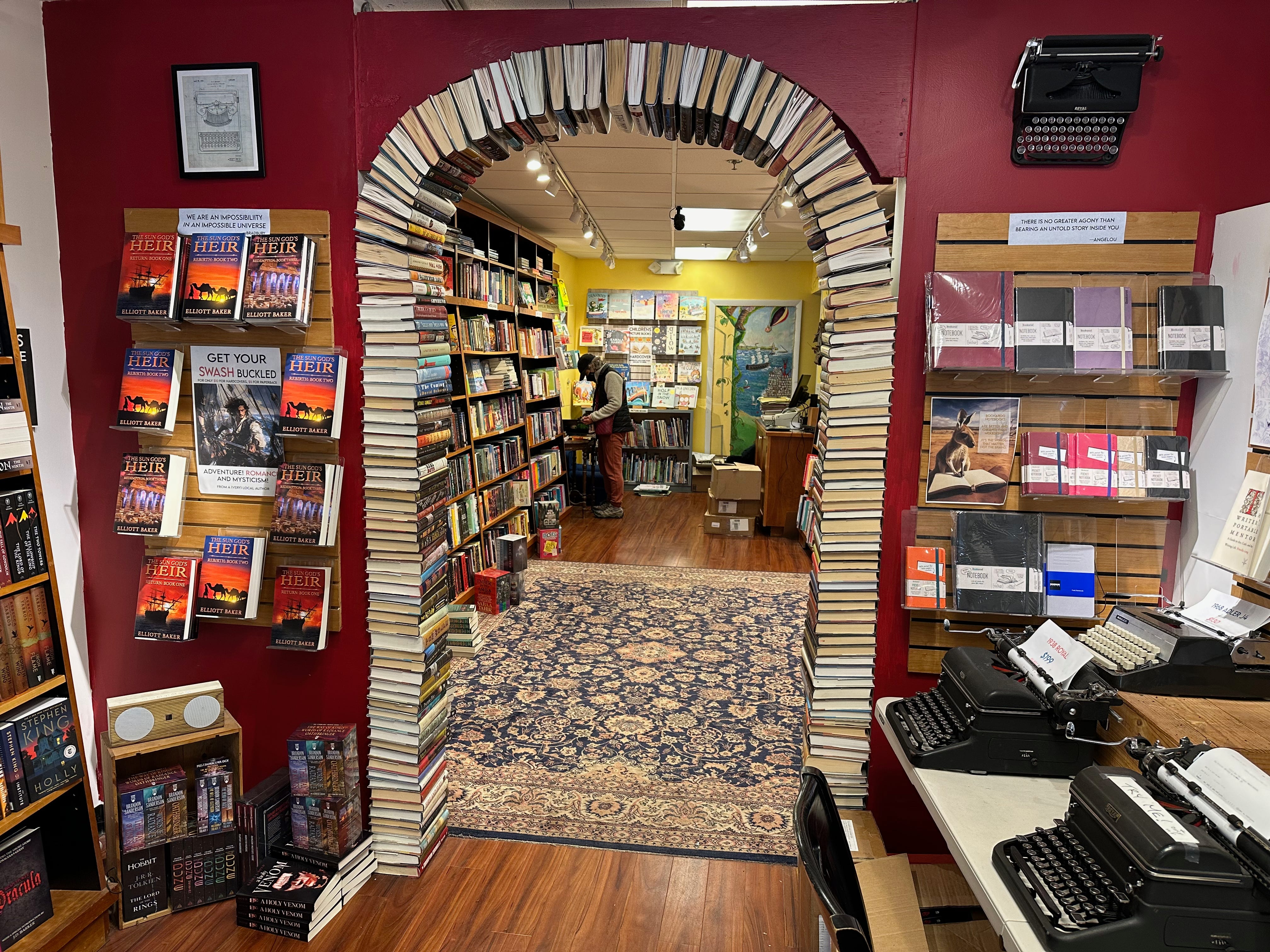
The Giver by Lois Lowry
Similar to many of my favorite novels, The Giver is set in a dystopian community. Citizens generally do what they’re told and don’t ask questions—that is, except for 12-year-old Jonas. Jonas begins to unravel the community’s dark secrets and takes on an impossible challenge.
Bird Box by Josh Malerman
Bird Box is one of the best thrillers I’ve read. Malerman does an amazing job building suspense around an unseen entity that causes millions of people across the world to kill themselves. Scattered survivors live in fear, cowering behind blindfolds and shuttered windows.
Atonement by Ian McEwan
This is one of the most modern books on the Top 200 Books list I’ve been chipping through. It’s a haunting story of a young 13-year-old girl who makes a mistake that she regrets for the rest of her life. McEwan explores love, war, sadness, social classes, and forgiveness in this unforgettable book.
The Housemaid by Freida McFadden
Twisty, mysterious, and fun—this book is for people who love thrillers with dark plotlines. Movie adaptations always polarize readers, but I thought the 2025 adaptation was well-cast and did justice to the source material. As always, if you haven’t seen the movie, read the book first. But the movie is worth a watch too.
The Chain by Adrian McKinty
As soon as I read the synopsis of this book, I immediately wanted to buy it: a woman named Rachel gets a phone call saying her daughter has been kidnapped. In addition to paying a $25,000 ransom, Rachel must select and kidnap another kid to keep “The Chain” going. The request is the ultimate test of a mother’s love, and Rachel learns that her love goes deep.
The Silent Patient by Alex Michaelides
Michaelides’s rookie novel is a thriller about a woman who murders her husband, then refuses to speak for six years. This book kept me guessing until the end. Apparently, it did the same for thousands of other readers too because The Silent Patient spent months on the bestseller list.
V for Vendetta by Alan Moore and David Lloyd
The illustrations for V for Vendetta are amazing, and the storytelling is up there with any book I’ve ever read. The book’s political undertones sound oddly similar to some events that have happened in America in the past several years. Alan Moore’s work helped convert me to reading more graphic novels.
Watchmen by Alan Moore and Dave Gibbons
This graphic novel not only ascended to the heights of pop culture but also to literary greatness. It’s on countless “Top Books” lists, including the Uber-List of the Top 200 Books I compiled. Watchmen is a masterfully written and illustrated story about what happens when power gets into the wrong hands.
Death Note: Black Edition, Vol. 1 by Tsugumi Ohba and Takeshi Obata
A teenager finds a random black notebook that he learns has the power to kill anyone in the world. When I first heard that synopsis, I thought this graphic novel sounded interesting but perhaps corny. Then I read it and realized it’s way deeper than the summary implies. It delves into the nature of good and evil, capital punishment, and even game theory.
1984 by George Orwell
Orwell’s classic novel lives up to the hype. It was also the origin of the phrase “Big Brother,” the name Orwell gave to the fictional dictator in Oceania. Just like any good dystopian fiction, 1984 holds up a magnifying glass to our present day, questioning any form of government surveillance, censorship, and propaganda.

Animal Farm by George Orwell
Orwell certainly spooked the American public about the perils of Communism. Not only did he deliver the dystopian gem 1984, but he also wrote the allegorical classic Animal Farm. If you’re like most people, you read this novel in school. If you didn’t, it’s worth the read.
Akira 1 by Katsuhiro Otomo
I sometimes unfairly judge things I don’t understand. For years, I did that with manga (Japanese comics and graphic novels). Then my brother Trevor recommended this book, and I decided to give it a shot. Akira shattered my ignorance and gave me a deeper appreciation for this art form.
Fight Club by Chuck Palahniuk
I knew Palahniuk was dark, but holy crap, this book is intense! Regardless, I tend to enjoy dark books, so Fight Club was my jam. Palahniuk did a great job of jealously protecting the book’s secret until the end.
The Street by Ann Petry
The Street was published back in 1946, and few of my bookish friends seem to have heard of it. Petry offers a view into the experience of a poor, Black, single mom trying to make her way in Harlem. The story is simultaneously poignant yet page-turning, gritty yet beautiful, and depressing yet somehow still hopeful. This was also the first novel by an African-American woman to sell over one million copies.
Gates of Fire by Steven Pressfield
In this epic novel, Pressfield tells how King Leonidas led 300 Spartans against the massive Persian army in the Battle of Thermopylae. Pressfield’s imagery is so realistic that West Point, the U.S. Naval Academy, and the Marine Corps assign Gates of Fire to their young cadets. This book is one of my top ten favorite novels of all time.
The Prestige by Christopher Priest
You’re probably familiar with the movie (starring Christian Bale, Hugh Jackman, Scarlett Johansson, and Michael Caine), but I’m guessing you’re not familiar with the book. As with most book/movie duos, the story is a bit different, but both are fulfilling in their own way. If you’re a fan of the movie, a lover of magic, or simply a connoisseur of fiction, you’ll enjoy the story of this battle between dueling magicians who fight for supremacy in 1800s England.
The Name of the Wind (Kingkiller Chronicle #1) by Patrick Rothfuss
I’m immensely grateful to my friends Cris, Cary, and Alex for recommending this book. The Name of the Wind was mind-blowingly good. It’s the first book in The Kingkiller Chronicle trilogy, but Rothfuss has been slow-pedaling the third book of the series for over a decade.
Harry Potter and the Sorcerer’s Stone (HP #1) by J.K. Rowling
Having never read the Harry Potter books as a child, my Aunt Shannon recommended them to me when I was in college, and I asked, “Isn’t that just a kids’ series?” Shannon (rightfully) put me in my place. I gave them a shot, and they became my favorite series I’ve ever read. I’ve now turned many other adults onto Harry Potter because it’s exceptionally well-written and one of the best-plotted series I’ve ever seen.
Holes by Louis Sachar
This is another “kids book” that is so much more than a kids book. Regardless of the intended audience, I love well-told stories, and Sachar’s book about the “cursed” boy Stanley Yelnats hits the mark. Stanley and the other boys at Camp Green Lake detention center are required to dig holes all day, and when he figures out the camp warden is looking for something special, Stanley foils the plot.
What Makes Sammy Run? by Budd Schulberg
Schulberg’s 1941 novel What Makes Sammy Run? follows the budding career of Sammy Glick, a ruthlessly ambitious kid trying to become a Hollywood star. You won’t always like Sammy, but you’ll always find him entertaining. Schulberg’s writing is poignant, and the book became one of my all-time favorites.

The Invisible Life of Addie LaRue by V. E. Schwab
Addie LaRue is a heart-wrenchingly beautiful, modern-day Faustian story about a girl who makes a deal to live forever. The catch? Everyone she meets immediately forgets her…until she meets a guy named Henry Strauss.
Frankenstein by Mary Shelley
This book was much different than I expected. Shelley’s portrayal of the monster as a humane and loving creature was meaningful and moving in a way few monster stories can achieve. As soon as I finished the book, I kicked myself for not having read it sooner.
Maus I by Art Spiegelman
Art Spiegelman tells the story of the Holocaust in graphic novel form, using mice as Jews and cats as Germans. This true story follows Art’s parents living through the horrors of Nazi rule. Maus is the most inventive retelling of WWII you’ll ever read.
The Art of Racing in the Rain by Garth Stein
Told from the perspective of a dog named Enzo, this book is a tale of family, heartbreak, hard work, and redemption. I love when writers come up with new ways to tell stories, and Stein’s decision to tell this story from the dog’s perspective was clever. The book is a tear-jerker, but it’s worth the read.
East of Eden by John Steinbeck
East of Eden was my introduction to Steinbeck. It felt like a slog in some sections (it’s ~650 pages), but it’s also beautifully written and worth the time if you can maintain patience. I read this in a book club, which helped me process the book’s layers and historical context with friends.
The Strange Case of Dr. Jekyll and Mr. Hyde by Robert Louis Stevenson
“Jekyll and Hyde” is such a popular concept these days that I didn’t realize how late in the book Stevenson reveals the truth about those two characters. It was fun to read the story with today’s knowledge and consider how shocked UK readers must have been in 1886 when they read Stevenson’s epic reveal. I also love short books, and this one is ~120 pages.
Dracula by Bram Stoker
Stoker uses journal entries, letters, and newspaper clippings to tell this iconic story. The local peasants of Transylvania are leery of Count Dracula, who owns a creepy castle atop a hill. And when English lawyer Jonathan Harker stays in the castle, he realizes there’s good cause for the peasants’ concerns.
The Secret History by Donna Tartt
This book came out in 2004 and became an international sensation shortly thereafter, but it took me a long time to hear about it. I’m glad I finally did because I’m a sucker for dark academia fiction, and this is one of the best books in that genre. It’s a story about a group of college students who follow a charismatic liberal arts professor to dangerous places—in both mind and body.
The Queen’s Gambit by Walter Tevis
You’re probably familiar with the Netflix series based on this book (if not, go watch it). I grew up playing competitive chess, so this one was especially fun and nostalgic for me. I loved the strong female protagonist and her titanic struggle against the male-dominated field of chess (and her inner demons).
The Hobbit by J.R.R. Tolkien
Bilbo Baggins gets more than he bargained for when he opens his door to find a wizard and a collection of dwarves. He leaves his slow-paced life in the Shire to set out on a mythical quest with his new retinue, kicking off arguably the most famous fantasy series of all time. I loved the characters and the entire epic world that Tolkien paints. Read this one first, and if you like it, you should definitely read the entire Lord of the Rings series (next up on the list).

The Fellowship of the Ring (LOTR #1) by J.R.R. Tolkien
I often struggle with the long, mythical names of places and characters in fantasy books, so it takes an exceptional series to get me interested. This one did the trick. It took me about 100 pages until I really started to get into the story, but then I was hooked.
A Gentleman in Moscow by Amor Towles
Count Alexander Rostov is sentenced to stay in a Moscow hotel for the rest of his life, and nearly the entire novel takes place within the hotel’s four walls. Despite his challenging situation, Rostov’s wit, charm, and indefatigable spirit inject hope and energy into this book. The fact that Towles could overcome such a severe limitation and craft a compelling story within a single building shows off his writing prowess.
Personal Recollections of Joan of Arc by Mark Twain
Did you know Mark Twain was obsessed with the story of Joan of Arc and spent 12 years researching her life? In this biographical novel, Twain puts you right into the action of Joan’s life from the perspective of her page and secretary, Sieur Louis de Conté. I didn’t know much about Joan’s story before this, and it helped me understand how inspiring and heroic she really was.
Slaughterhouse-Five by Kurt Vonnegut
Vonnegut’s novels are nothing if not inventive and weird. Few people are brave enough or absurd enough to write an anti-war novel infused with a sci-fi story about a man traveling through time and meeting creatures from another planet. And yet, that’s exactly what Vonnegut did in Slaughterhouse-Five. (Btw, if you’re looking for amazing writing tips, check out his little-known writing advice book Pity the Reader.)
The Martian by Andy Weir
This book put Weir on the map, and he’s been a literary superstar ever since. His protagonist Mark Watney is one of the funnest and funniest characters you’ll ever find. Even though The Martian contains some intense science, Weir makes every page readable and interesting.
Project Hail Mary by Andy Weir
Weir provides another science-y and whimsical romp through space in Project Hail Mary. When the book begins, Ryland Grace finds himself on a spaceship light-years away from Earth. His two fellow astronauts are dead, and Ryland doesn’t remember who he is or why he’s there.
The Time Machine by H.G. Wells
H.G. Wells broke new literary ground with this book, which popularized the concept of time travel and became the first modern-day science fiction novel. He explores fascinating questions about the potential future of humanity as the gap between the rich and the poor expands. I loved this prescient book.
The Underground Railroad by Colson Whitehead
Whitehead reimagines the Underground Railroad as an actual, physical railroad. Even though it’s a work of fiction, you can feel the truth of the story and characters on every page. From the courageous protagonist Cora to the brutal plantation owner Terrance Randall, it’s a glimpse into life as a slave in the pre-Civil War American South.
The Picture of Dorian Gray by Oscar Wilde
The youthful Dorian Gray sells his soul for eternal youth, but his portrait continues to age, revealing Gray’s physical (and moral) deterioration. But the book is also a story of forbidden love in a society that disallowed homosexuality. Tragically, Wilde’s novel was even used in court as evidence against him in an indecency lawsuit.
The Book Thief by Marcus Zusak
Zusak introduces the most unique narrator in fictional history: Death. Death tells the story of a young foster girl named Liesel who resorts to stealing books because she loves them so much. (I can relate.) This story is set in Nazi Germany in 1939, and it carries all of the emotional heft you’d expect from a story in that setting.
For each book above, I included an affiliate link from Bookshop.org. (If you purchase a book, you’ll support me and local bookstores. Win-win!)
What am I missing? What should I check out next? Leave a comment below.
👉 Want to receive two posts per week with book recs and personal development tips? I’d be honored for you to subscribe to Leader & Learner.
Looking for more book recs? You’ll enjoy these:
7 Incredible Novels You’ve (Probably) Never Heard About
15 Books That Tangibly Improved My Life
📣 Community Updates by Glasp
🟥 Glasp Talk with Bobby Powers:
Glasp Talk features intimate interviews with luminaries, revealing their emotions, experiences, and stories. The guest, Bobby Powers, is a dedicated learner passionate about leadership and personal development. With over a decade of experience managing teams, leading onboarding, and Learning and Development programs at various startups and SMBs, Bobby is also an avid reader, having read over a thousand books in the last 15 years.
✨ Want a concise summary before diving in? Install the YouTube Summary with ChatGPT extension by Glasp for instant video summaries!

🟥 YouTube Summaries on Mobile:
We made a major update to YouTube summarization in the Glasp mobile app. Summarize any video faster, all inside the app, with no switching between tools. See the updated tutorial here.
Would you like to take Glasp on the go?
With the Glasp mobile app, you can highlight and organize your favorite content anytime, anywhere. Stay productive on the move and never miss an insightful quote.
Partner With Glasp
We currently offer newsletter sponsorships. If you have a product, event, or service you’d like to share with our community of learning enthusiasts, sponsor an edition of our newsletter to reach engaged readers.
Uncle Tom’s Cabin
100... is a long list, so I know I should expect some utter shit, scattered in some pearls too. : )))))
But, some of the books listed, I read before Bobby was born, and many newer ones could easily end up on a similar list from my reading over the last 30 or 40 years.
The very nice to see are three classics, 1984, The Handmaid's Tale and If On a Winter’s Night, A Traveler by Italo Calvino... The more recent books that are excellent, include Gone Girl, All the Light We Cannot See, and A Gentleman in Moscow... with The Martian and The Invisible Life of Addie LaRue really need to make the five of the best three. Gone Girl for the plot structure alone should be on everyone's list... Paula Hawkins' "The Girl on the Train" should also make many lists.
... now for those books read in 'e'-form, did you capture quotes or other key paragraphs in Glasp or say Zotero, etc.? : ))))))
Excellent 'sub', so linked up there too.