


📢 A quick note for YouTube Summary users
We’re currently fixing a bug where the sidebar appears in the top-left corner of the screen. While we work on it, please use Glasp Reader as an alternative.
Also, if you run your own YouTube channel, register it with YouTube Channel Tracking. Registered channels are prioritized for backup, so your content stays accessible even when issues occur.
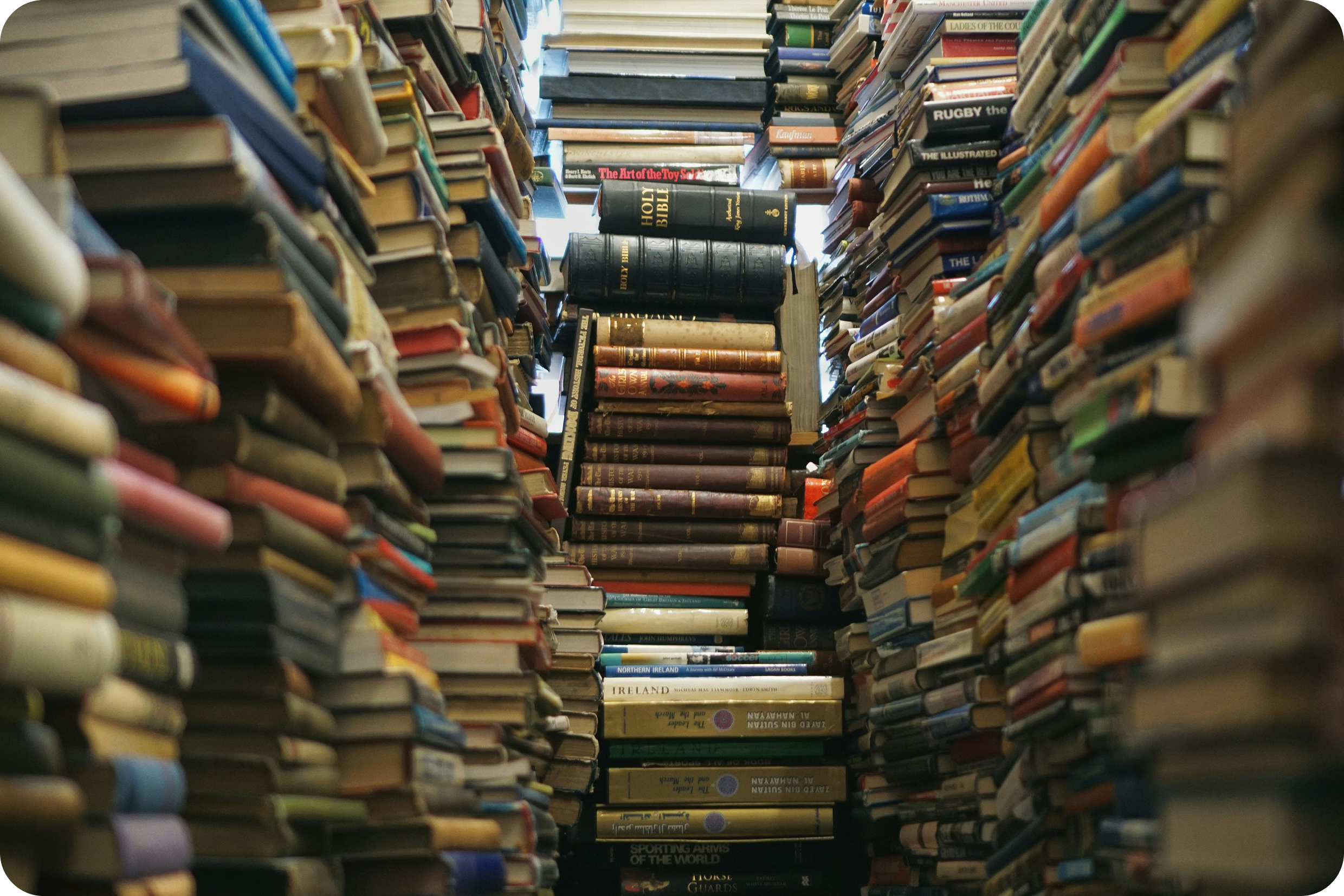
There’s a word in Japanese for the books you buy but never read: tsundoku (積ん読).
The word dates to 1879. The earliest known usage appeared in a satirical text about a teacher who owned books but didn’t read them — written not as a criticism, but as a wry observation. Everyone does it. Your professor does it with academic journals. You do it with the 47 Kindle samples you downloaded last month.
In Japan, tsundoku carries no shame. The books are there. They’ll wait.
Western reading culture tends to frame unread books differently. You bought it, so you should read it. You started it, so you should finish it. Every unread spine becomes an accusation.
We think that framing is exactly wrong.
Umberto Eco’s Anti-Library
Umberto Eco — Italian novelist and semiotician, author of The Name of the Rose — owned a personal library of roughly 30,000 books. Visitors would inevitably ask: “Have you really read all these?”
He found the question tiresome. The whole point was that he hadn’t. A library of books you’ve already read is an archive. A library of books you haven’t read is a research tool.
Nassim Nicholas Taleb, author of The Black Swan, gave this idea a name: the anti-library. His argument is counterintuitive but airtight: the value of a personal library grows in proportion to how much of it you haven’t read. Read books represent what you already know. Unread books represent what you don’t know — and what you don’t know is vastly larger, and more important.
Taleb calls people who focus on the limits of their own knowledge “antischolars.” The anti-library is a humility device. It works because it keeps you honest about the size of your ignorance.
This is where the research gets interesting — why unread books measurably make you smarter, what the psychology of book-buying actually reveals, and how to turn your tsundoku pile into a working knowledge system.
What’s on your anti-library right now — the book that’s been on your shelf the longest, unread? Leave a comment.